Agriculture ERP for End-to-End Agricultural Operations
Manage farm and crop operations, procurement, inventory, supply chain, sales and finance in one connected ERP platform. Built on Odoo and tailored to the way agricultural businesses actually operate.
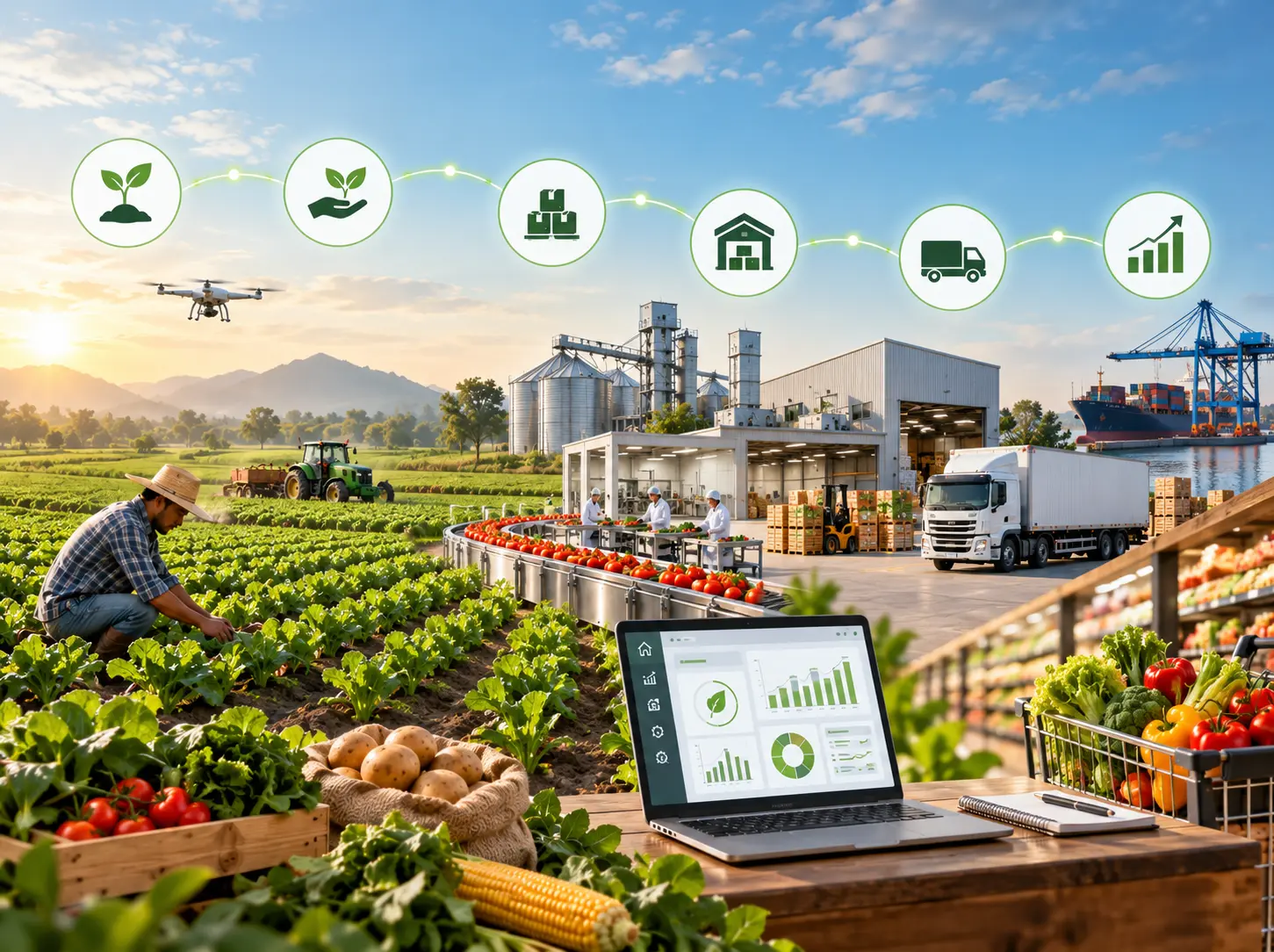
What Is Agriculture ERP?
An agriculture ERP is a centralized system for managing agricultural operations and the business processes connected to them.
For agriculture businesses, this can bring farm and crop operations together with procurement, inventory, warehousing, sales and finance. The Agriculture Management solution covers farms, fields, crops, seasons, resources, production, costs and profitability, while the agricultural supply chain solution extends management into contract farming, quality, traceability, storage, distribution and financial reporting.
Instead of treating farm operations and business management as separate processes, an agriculture ERP system provides a connected operating structure around the agricultural lifecycle.
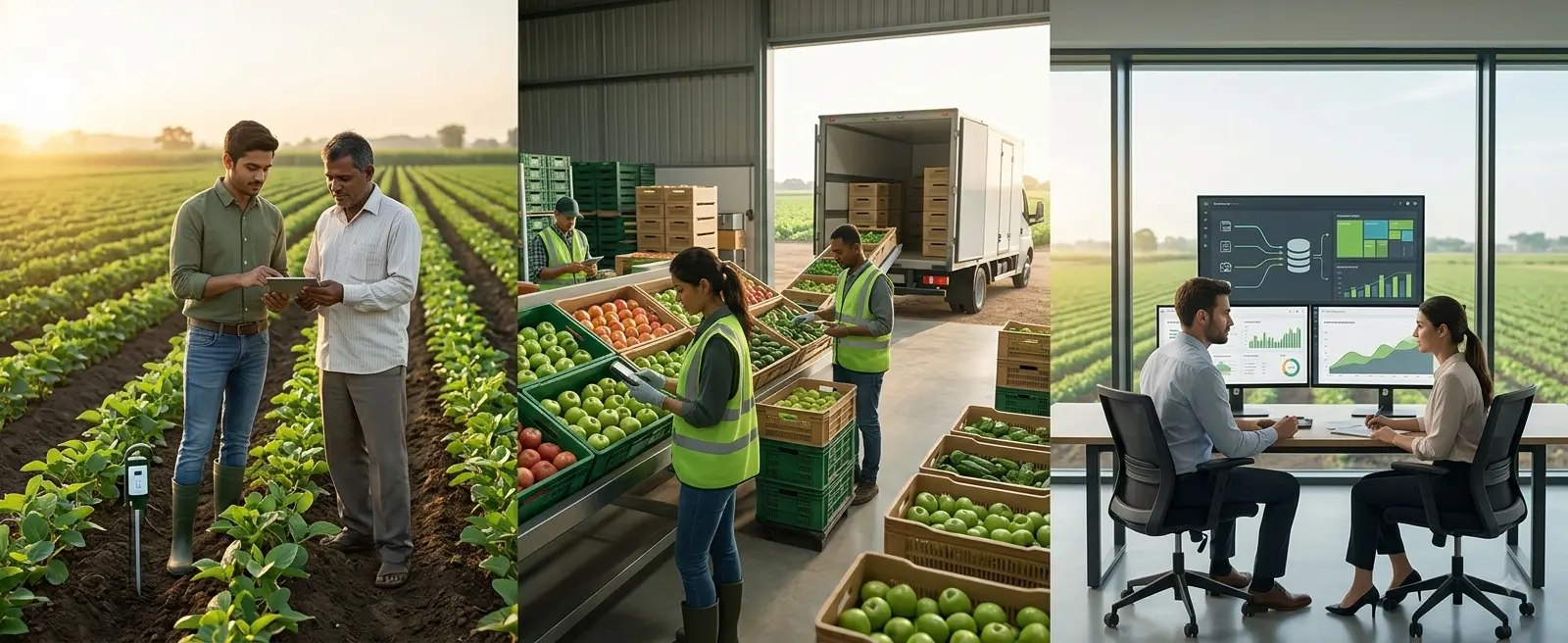
Why Agriculture Businesses Need an ERP
Agricultural operations involve information across farms, seasons, crops, workers, inputs, inventory, procurement, quality, sales and finance. When these activities are managed separately, maintaining a consistent view of operations can become difficult.
An ERP for agriculture provides a centralized structure for these processes.
It can help address:
Fragmented systems by bringing agricultural operations into a centralized platform.
Manual records by digitizing and standardizing operational records.
Poor visibility through dashboards, reports and analytics covering farms, seasons, stock, production and costs.
Disconnected procurement by linking purchase processes with suppliers, farmers, receipts and billing.
Inventory issues through warehouse, stock movement, reservation and availability management.
Cost uncertainty through season budgets, expenses, operational cost tracking and profitability analysis.
Traceability gaps through lot-based produce identification and movement tracking across the supply chain.
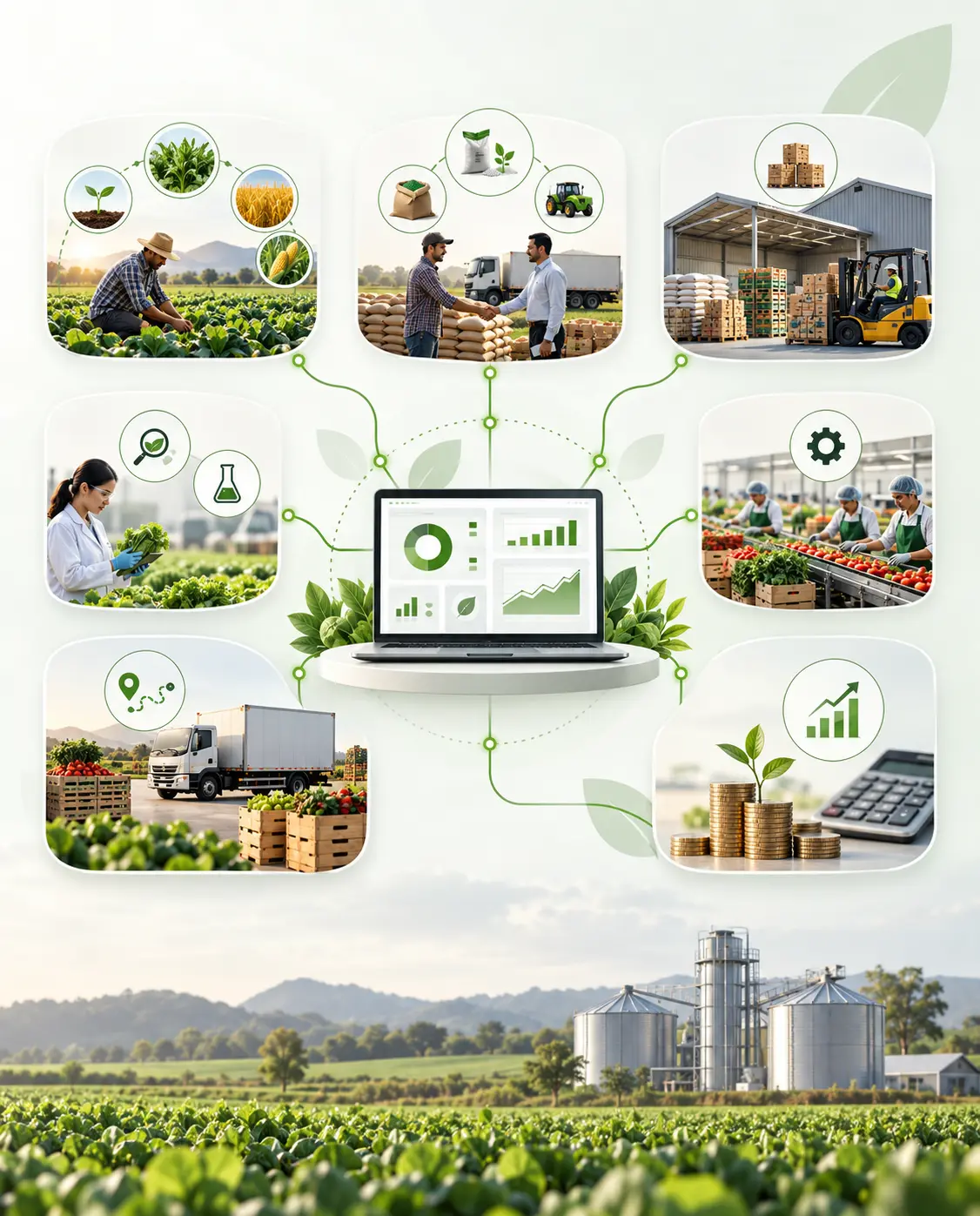
The objective is not simply to add another software layer, but to create a connected operating system for agricultural business processes.
What Can Agriculture ERP Manage?
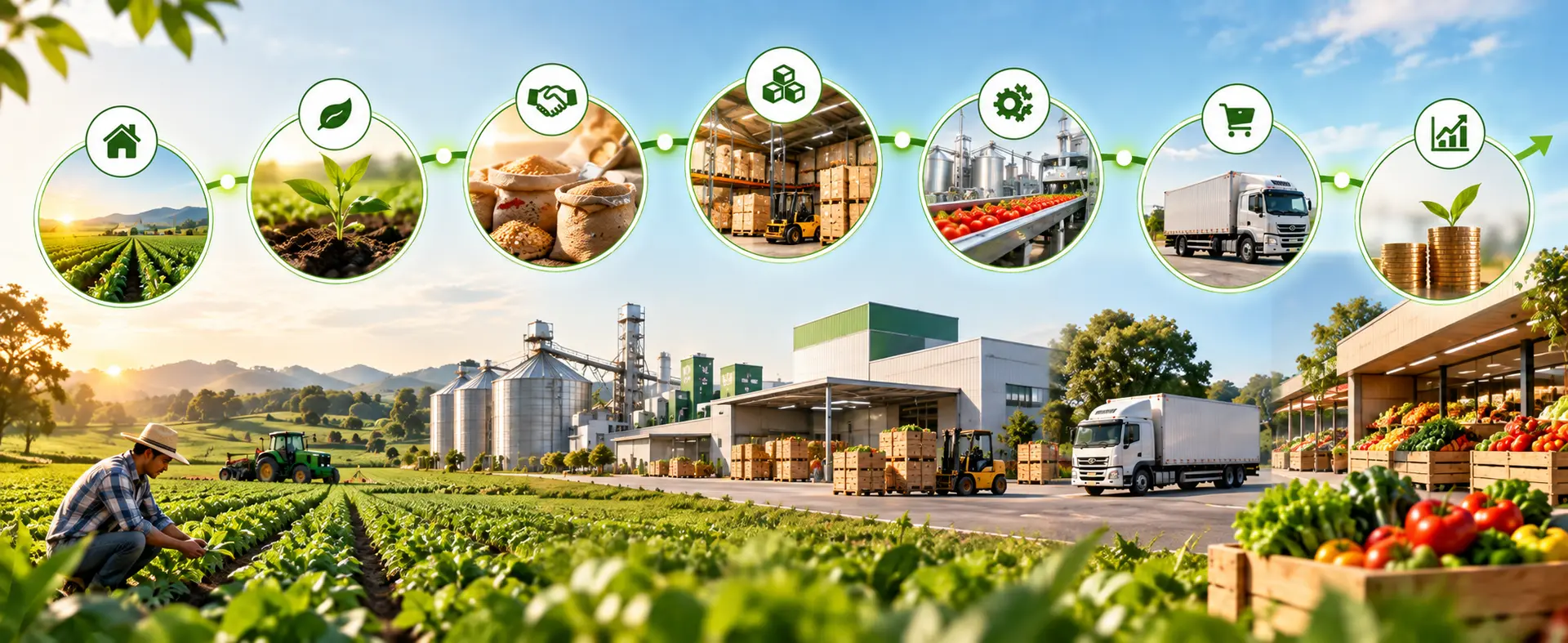
An agriculture ERP can connect activities across the agricultural operating flow:
Farm
Crop
Procurement
Inventory
Processing
Sales
Finance
At the farming level, the solution manages farms, lands, farmers, seasons, crops, field visits, crop issues, soil and water analysis, resources, assets and production.
The supply chain extends this flow through contract farming, purchase management, bag distribution, weighment, quality management, cold stores, warehouses, inventory, sales and distribution.
Financial processes include customer and vendor invoicing, payments, journals, ledgers, financial reporting, budgeting, budget-versus-actual analysis and cost analysis.
This creates a connected agriculture management ERP structure from agricultural production through commercial and financial operations.
Agriculture ERP for Farm Management
Agriculture ERP software can provide a structured view of farm-level operations across farms, lands, farmers and agricultural resources.
The Agriculture Management solution supports farm and land records, farmer assignments, farm types, crop seasons, seasonal crops and production tracking. Field visits can include inspections, recommendations and photos, while crop health records can capture diseases, issues and corrective actions.
Resources such as field managers, farmers, agronomists and workers can be managed alongside labour costs. Farm assets and equipment usage can also be logged and charged within the season.
Explore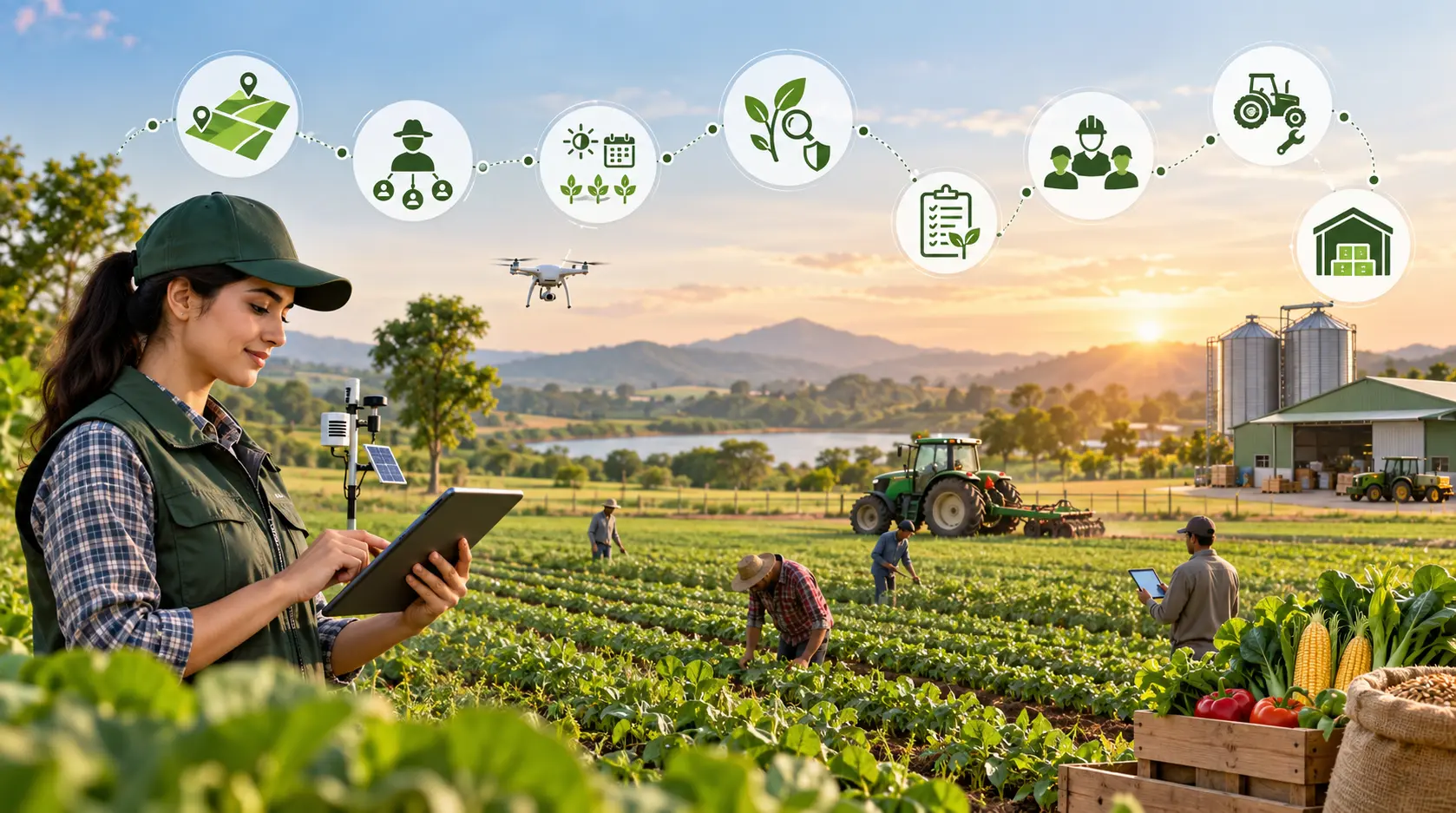
Farms & Lands
Farmers & Workforce
Seasons
Assets & Operations
Agriculture ERP for Crop Management
Crop operations can be organized around individual crop seasons, with planning and operational records maintained throughout the season.
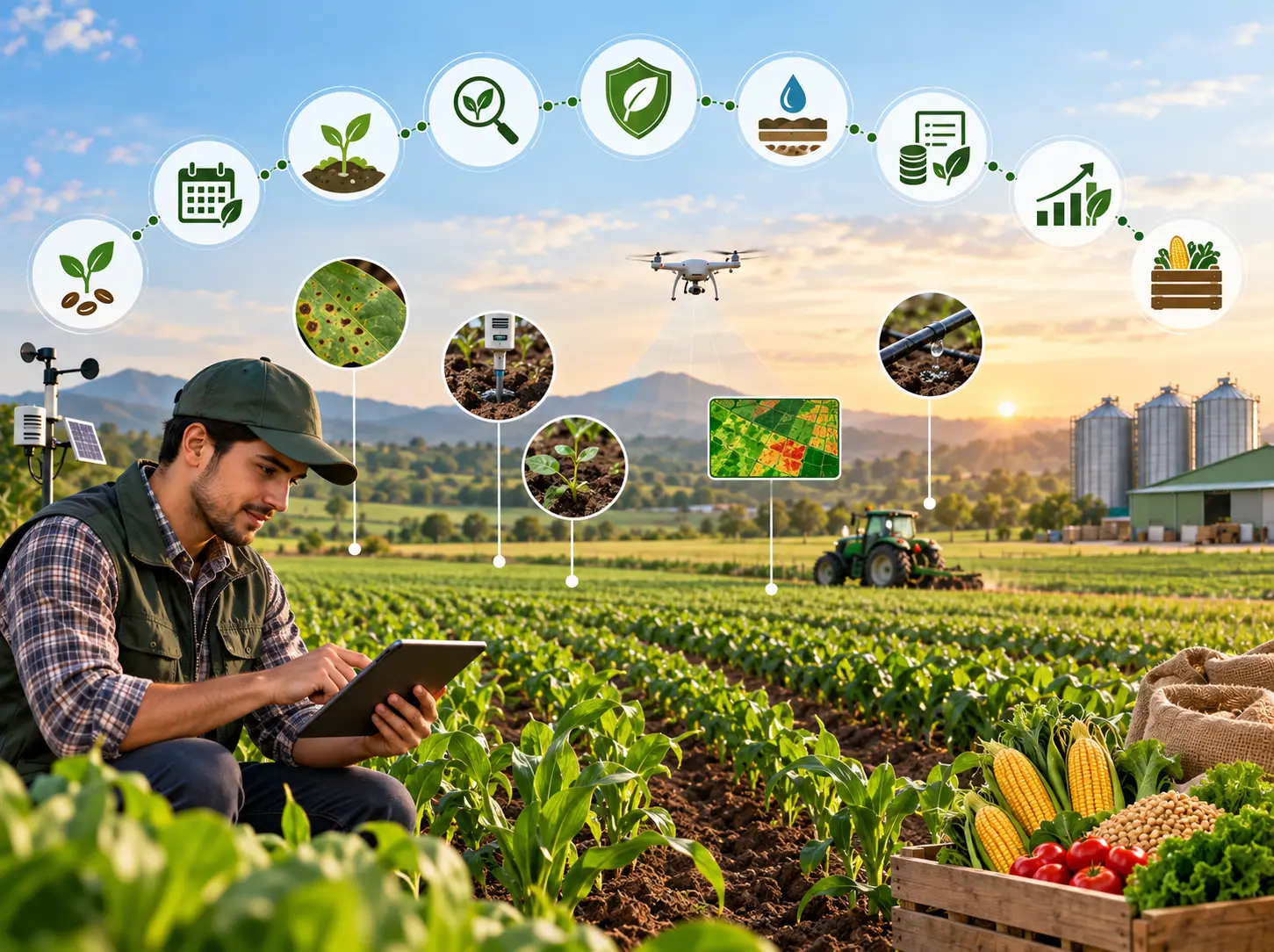
The solution supports seasonal crops, expected yield and cost price per crop, crop season tasks, field visits, crop diseases, crop issues, soil analysis and water analysis. Crop protection, seed management and cropping methods are also included within the Agriculture Management scope.
Season budgets can include quantities, units, prices and totals, while season expenses can cover electricity, labour, assets, miscellaneous costs and raw materials. Production tracking records harvest quantity and value for the season.
ExplorePlan
Grow
Monitor
Manage Issues
Harvest
Analyse
Agriculture ERP for Supply Chain
Agricultural supply chain operations can extend from farmer engagement and procurement through quality, storage, inventory, sales and financial processes.
The Agri Supply Chain solution covers contract farming, purchase management, bag distribution, weightment and traceability, quality management, cold store and warehouse management, inventory management, farmer settlement, sales and distribution, finance and accounting, budgeting and reporting.
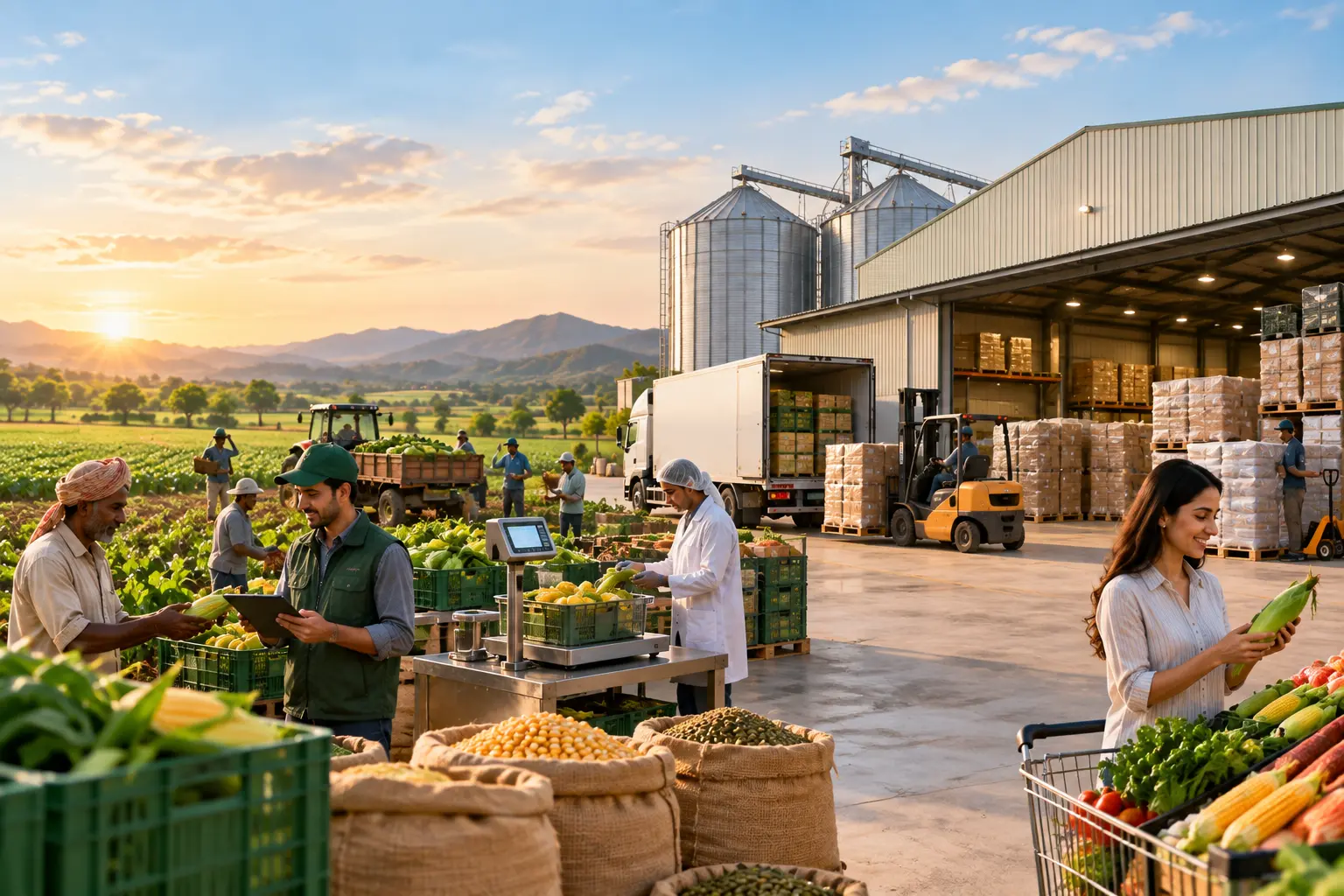
Produce can be tracked through farmer purchase, warehouse storage, inventory movements and customer deliveries using lot number references. Quality inspections, grading and quality deductions can be managed using configured quality parameters.
Farmer
Procurement
Quality
Warehouse
Customer
Agriculture ERP for Contract Farming
Contract farming operations can be managed through farmer registration, farming agreements, purchase deals, sales deals and farmer-wise purchase tracking.
Farming agreements can define products, cultivation area, expected yield, cultivation schedule, purchase quantity, pricing, quality standards, contract validity, distributed products and planned buyback. Purchase activity can then be tracked by farmer through quantities, quality results, values and transaction history.
This provides a structured agri business ERP flow for organizations managing agricultural production and farmer networks.

Agreement
Input Distribution
Purchase Deal
Quality
Buy-Back
Farmer
Agriculture ERP for Agricultural Procurement
Agricultural procurement can be managed from purchase deal planning through purchase orders, material receipts, supplier billing and purchase tracking.
The supply chain solution supports supplier registration, purchase deal planning, purchase order processing, material dispatch receipts, purchase receipts, landed cost allocation, supplier returns, supplier bills and purchase lifecycle tracking.
Deal
Purchase Order
Dispatch
Receipt
Landed Cost
Vendor Bill
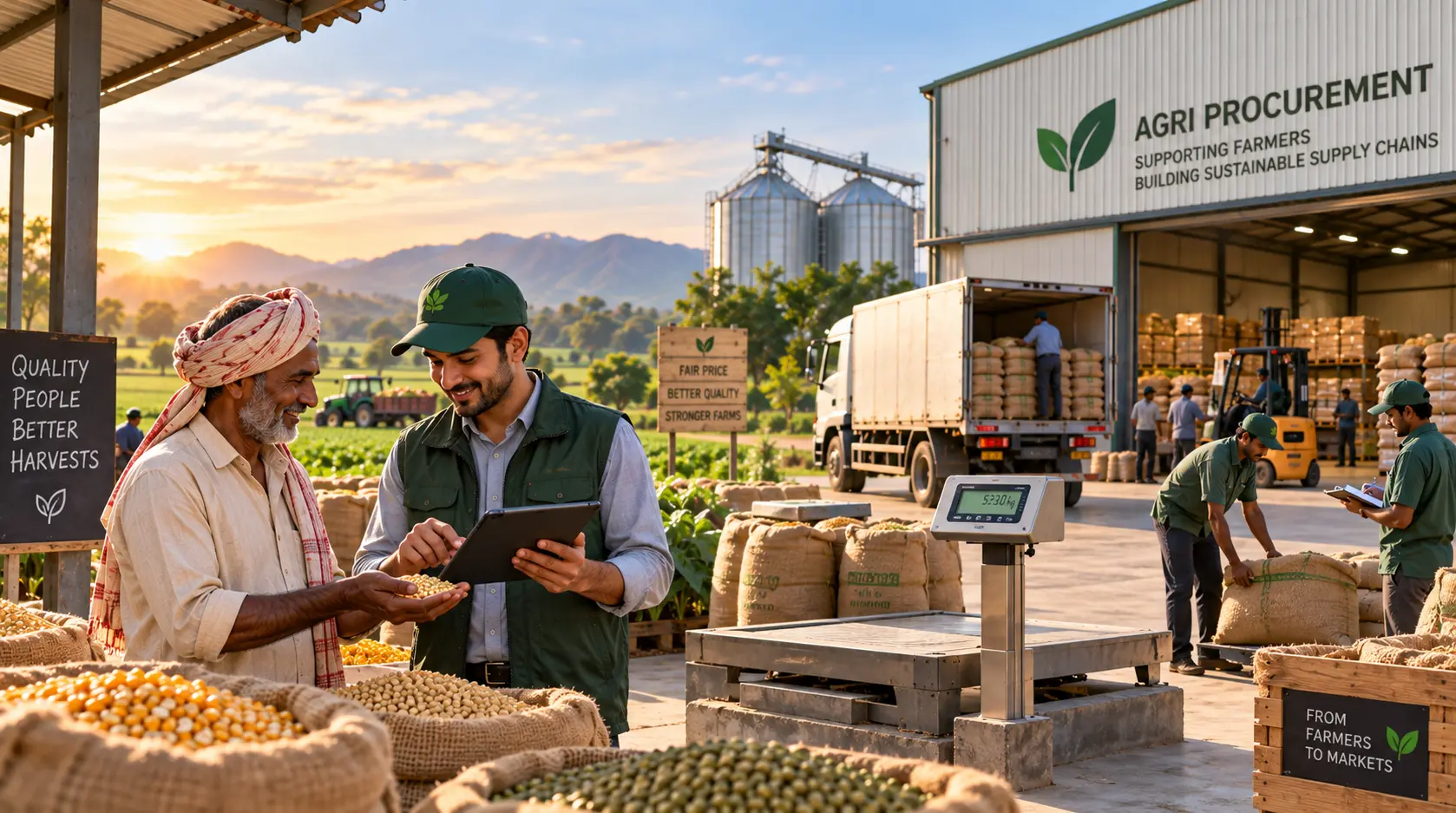
For farmer-based procurement, purchase deals can define product details, quantities, pricing, quality standards, validity periods and tolerance parameters. This provides a structured procurement process within the wider agriculture ERP system.
Storage Locations
Inventory
Lot Traceability
Stock Movement
Agriculture ERP for Inventory and Warehousing
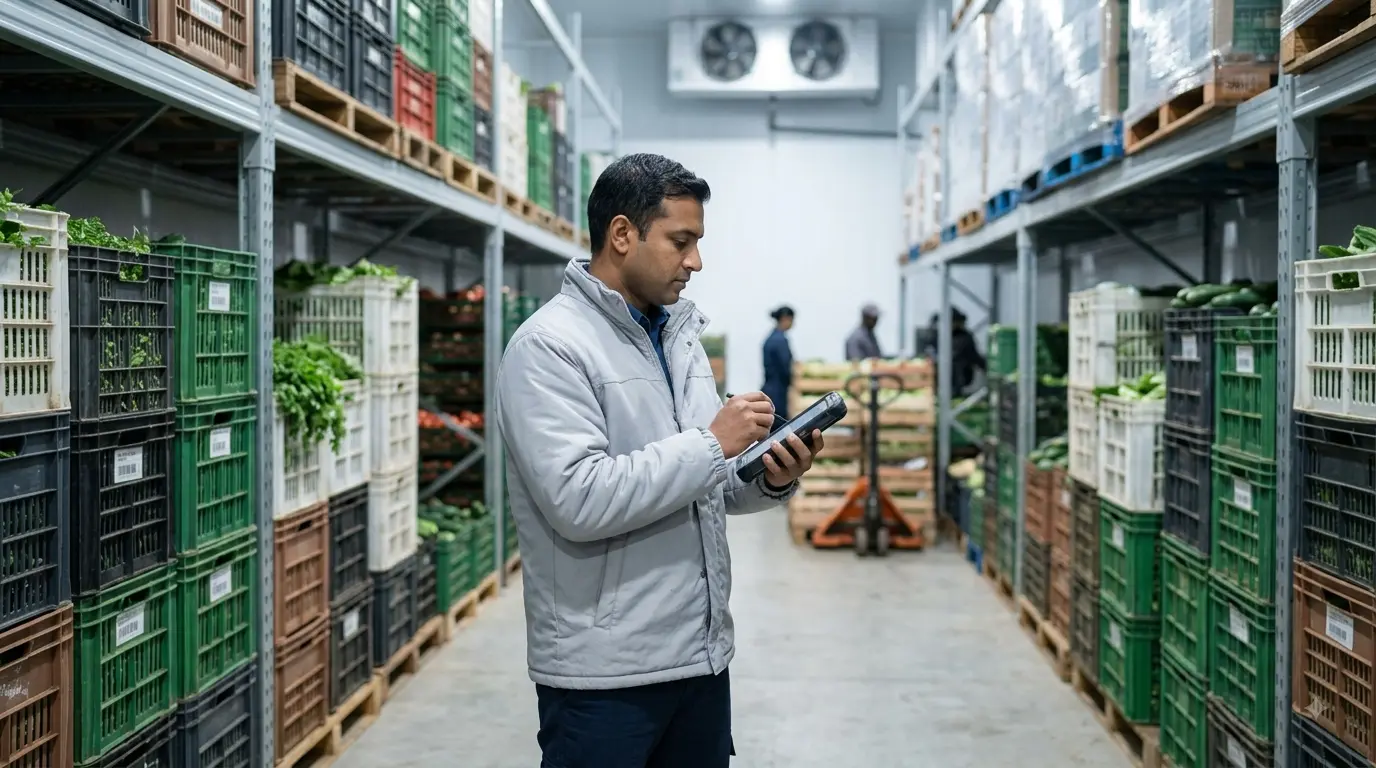
Agriculture ERP software can connect agricultural inventory with warehouses, cold stores, stock movements and customer deliveries.
The solution supports warehouse and cold-store configuration, storage locations, stock transfers, inventory valuation and warehouse operations. Inventory management includes stock availability, reservations, adjustments and stock availability checks across multiple warehouses.
Lot numbers provide product identification and traceability from farmer purchase through warehouse storage, inventory movements and customer deliveries. Restricted and unrestricted lot management can also be configured within the inventory flow.
Agriculture ERP for Finance and Profitability
Agricultural financial management can be connected with operational transactions rather than maintained as a separate process.
The solution supports customer and vendor invoicing, credit notes, debit notes, vendor batch payments, payment and receipt management, journals, ledgers and financial reporting.
For agricultural operations, the Agriculture Management solution also tracks season expenses, income, costs and season-level profit and loss. The supply chain solution adds budget planning, budget revisions, budget-versus-actual analysis and operational cost analysis.
Income
Costs
Profitability

Budget vs Actual
This connects operational data with the financial information needed to analyse agricultural business performance.
Agriculture ERP Implementation With Caret
Caret IT approaches the agriculture ERP as an operational system rather than a generic software deployment.
The Agriculture Management solution is structured around farms, fields, seasons, crops, resources, production, expenses and profitability. The Agri Supply Chain solution extends the operating model into contract farming, procurement, quality, warehousing, inventory, sales and finance.
The documented solution also includes dashboards, reports, printable reports and Excel reporting for agricultural operations.
The implementation path should therefore be aligned with the agricultural processes the business needs to manage, from operational records through connected commercial and financial workflows.

Understand Operations
Configure the Agricultural Workflow
Connect Business Processes
Connect Your Agricultural Operations
Bring farm management, crop operations, procurement, inventory, supply chain and financial management into a connected agriculture ERP system.