Crop Management Software for Planning, Production and Profitability
Plan crop seasons, track field activity and crop health, and record production and cost from planning through harvest.
What Is Crop Management Software?
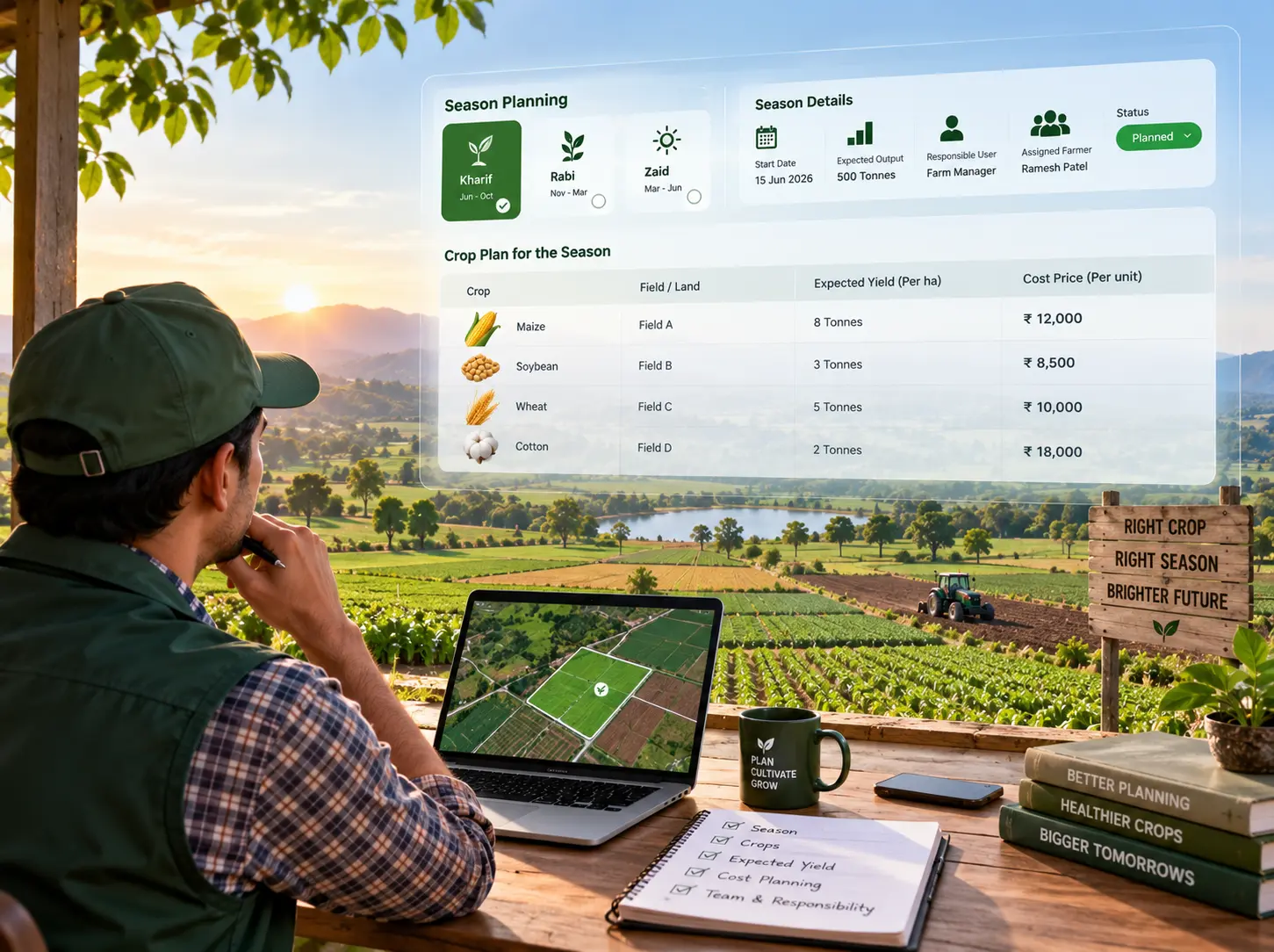
Crop management software is the system agriculture businesses use to plan, record and review everything that happens to a crop across a season — from setting up the season and expected output, to logging field visits, tracking crop health, recording production, and calculating cost and profitability. Instead of maintaining season plans, field notes and cost sheets separately, a crop management system keeps land, season, crop, cost and output information connected in one place.
For businesses running multiple crops across multiple farms and seasons, this turns scattered field records into a structured, season-by-season view of what was planned, what happened in the field, and what was produced.
Season
Field
Crop
Cost
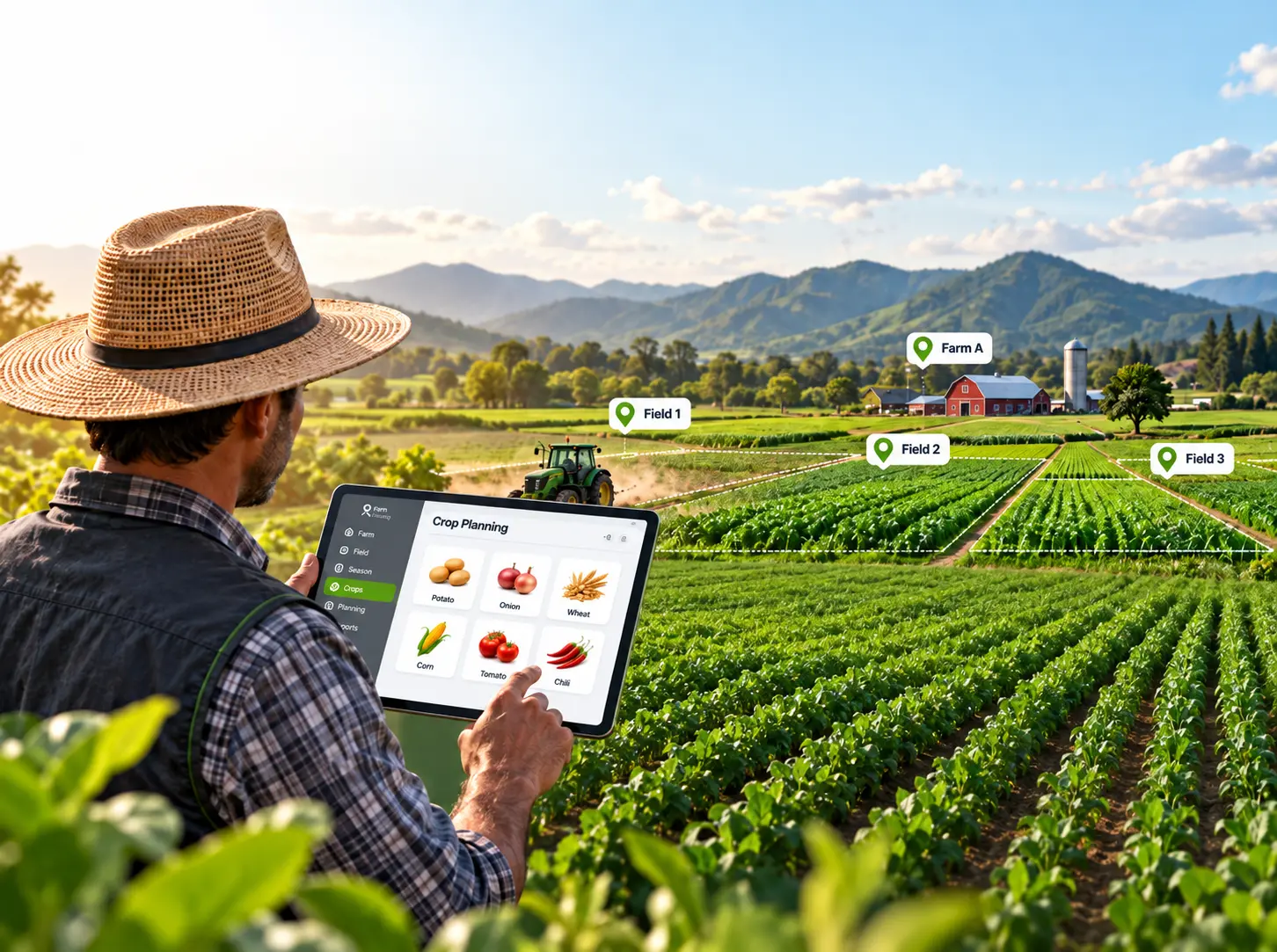
Crop Planning by Farm, Field and Season
Crop planning starts with the season. A crop season is created first, with its start date validated against the month range of the selected season, so planning stays aligned to actual growing periods. Each season carries its own status, expected output, responsible users and assigned farmer, so a farm manager always knows who is accountable for what.
Within a season, expected yield and cost price are planned per crop, giving a clear target before cultivation begins. This keeps crop planning tied to the specific farm, land and season it belongs to, rather than existing as a separate spreadsheet exercise.
Farm
Land
Season
Crop
Track the Crop Lifecycle
Crop management follows the season from planning through to production:
Planning
Cultivation
Field Activities
Crop Monitoring
Production
Harvest
Sales
Planning
Create the crop season, set expected yield and cost price per crop, and build the season budget.
Cultivation
Record crop growing activity and cropping methods, supported by seed management (purchases, suppliers, costs and usage).
Field Activities
Log field visits with inspections, recommendations and photos, and manage phase-based crop season tasks created automatically for the season.
Crop Monitoring
Record crop diseases, issues and corrective actions, and capture soil and water analysis results against configured indicators.
Production
Record harvested quantity, value and description per season against the plan.
Harvest
A season can only move to complete once all its tasks are finished, keeping harvest records tied to actual field completion.
Sales
Once produce is harvested and recorded, it moves into procurement, warehousing and sales processes — covered separately on the agricultural supply chain page.
Track Agricultural Inputs by Crop
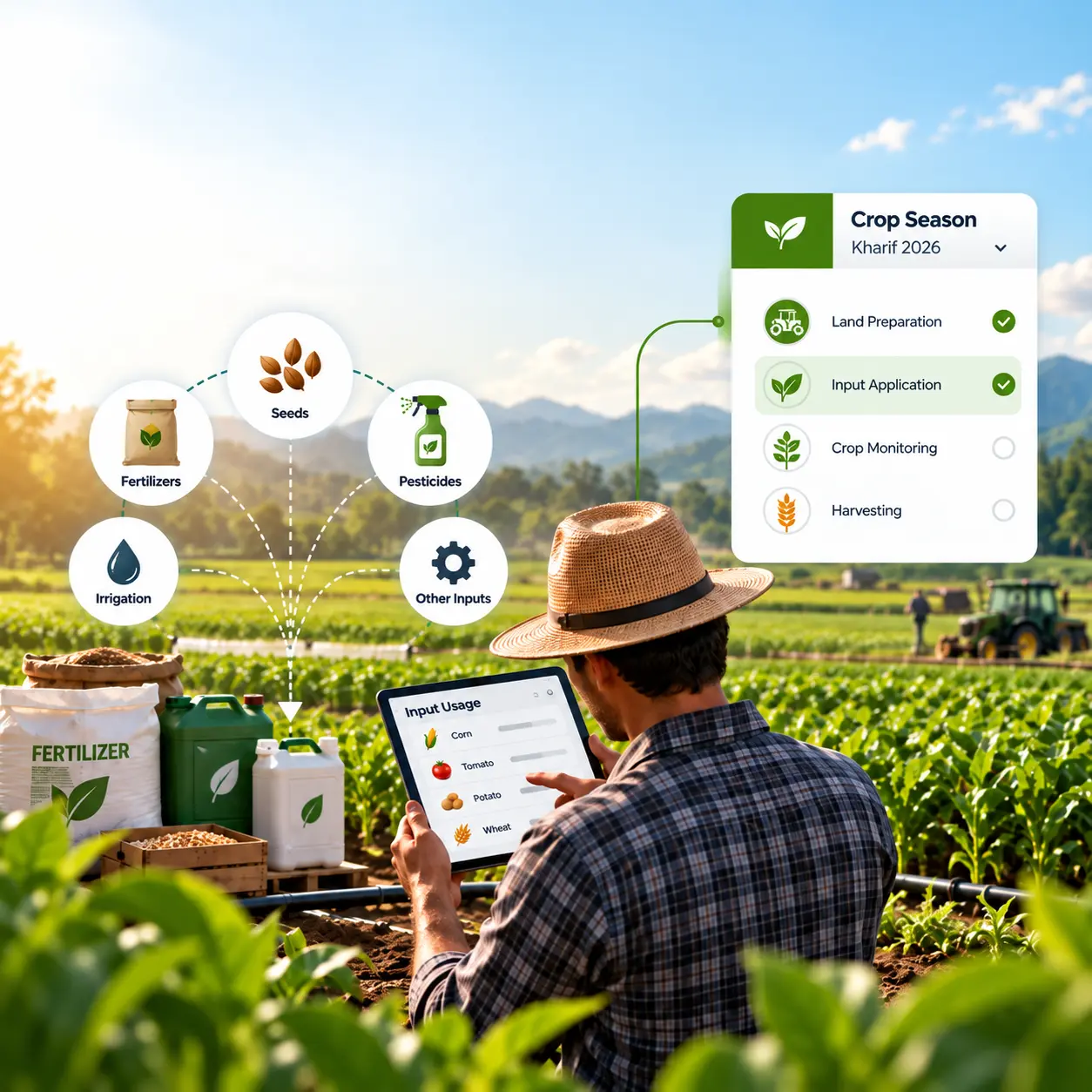
Input records are maintained at the source:
Material consumption during cultivation is tied to crop season tasks, so input usage stays connected to the season it was used in rather than sitting in a separate purchase log.
Seeds
seeds are tracked through purchases, suppliers, costs and usage
Crop Protection
pesticides and herbicides used for crop protection are registered with their cost and vendor details
Fertilisers
Fertiliser use sits alongside these as part of the same input records.
Monitor Crop Health and Field Issues
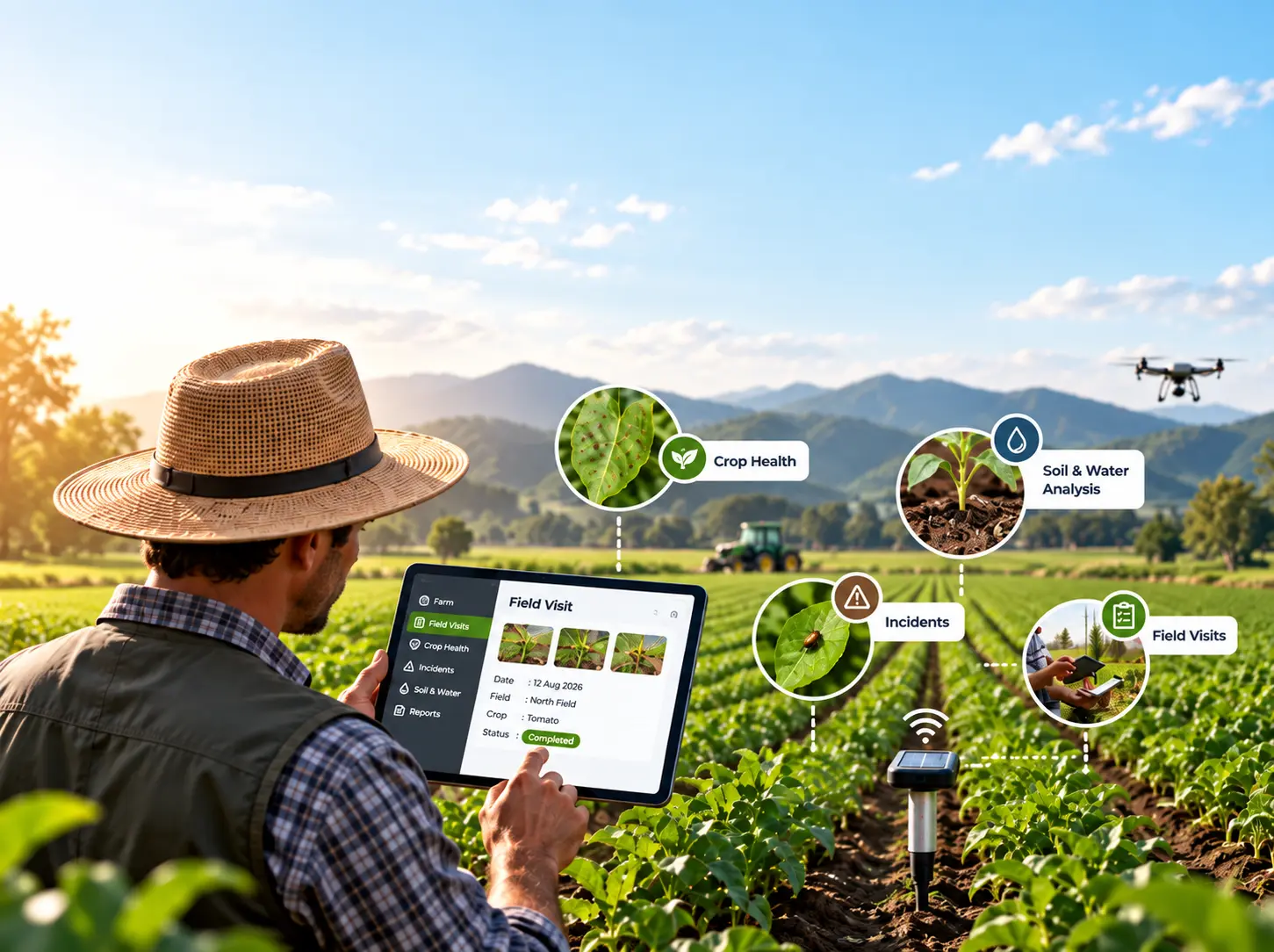
Field Visits
Field visits are logged with inspections, recommendations and photos, with visit dates validated to fall within the active season.
Crop Health
Crop health issues — diseases and problems — are recorded against defined categories and templates, along with the corrective action taken.
Incidents
Separate incident types allow other field issues to be logged and tracked.
Soil & Water Analysis
Soil and water analysis results are captured against configured indicator libraries, giving field condition data alongside crop health records.
Track Crop Production and Yield
Expected yield is set per crop during season planning, giving a clear target to work against. As the season progresses, harvested quantity, value and description are recorded per season, allowing planned expected output to be reviewed against what was actually produced.
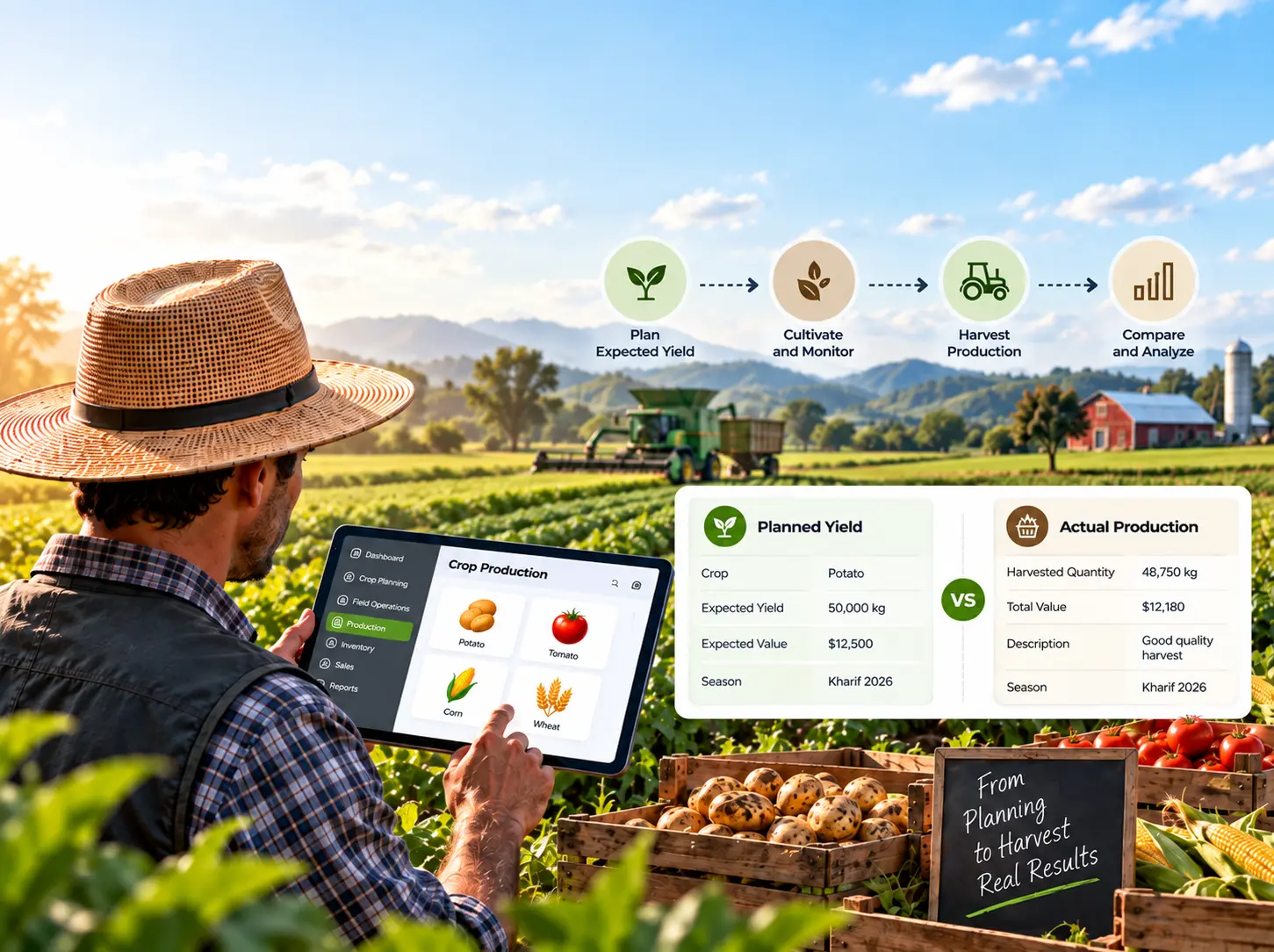
Expected yield is set per crop during season planning, giving a clear target to work against.
As the season progresses, harvested quantity, value and description are recorded per season, allowing planned expected output to be reviewed against what was actually produced.
Manage Harvests
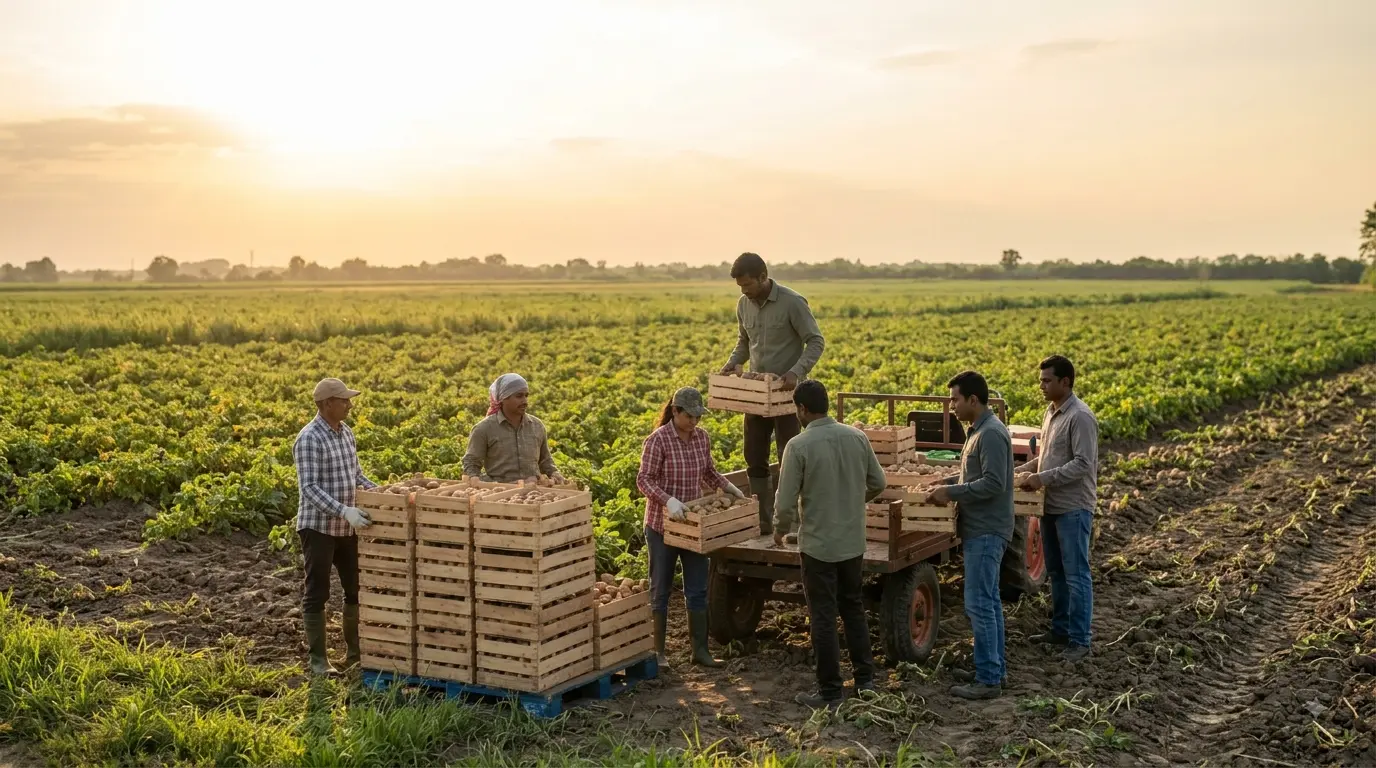
Harvest data is connected to season execution rather than recorded on its own. If a crop season is marked complete before its tasks are finished, the system raises a warning and keeps the season state unchanged — a season only moves to complete once all of its crop season tasks are done. This keeps recorded harvest quantity and value tied to confirmed, finished field work.
Calculate Crop Costs and Profitability
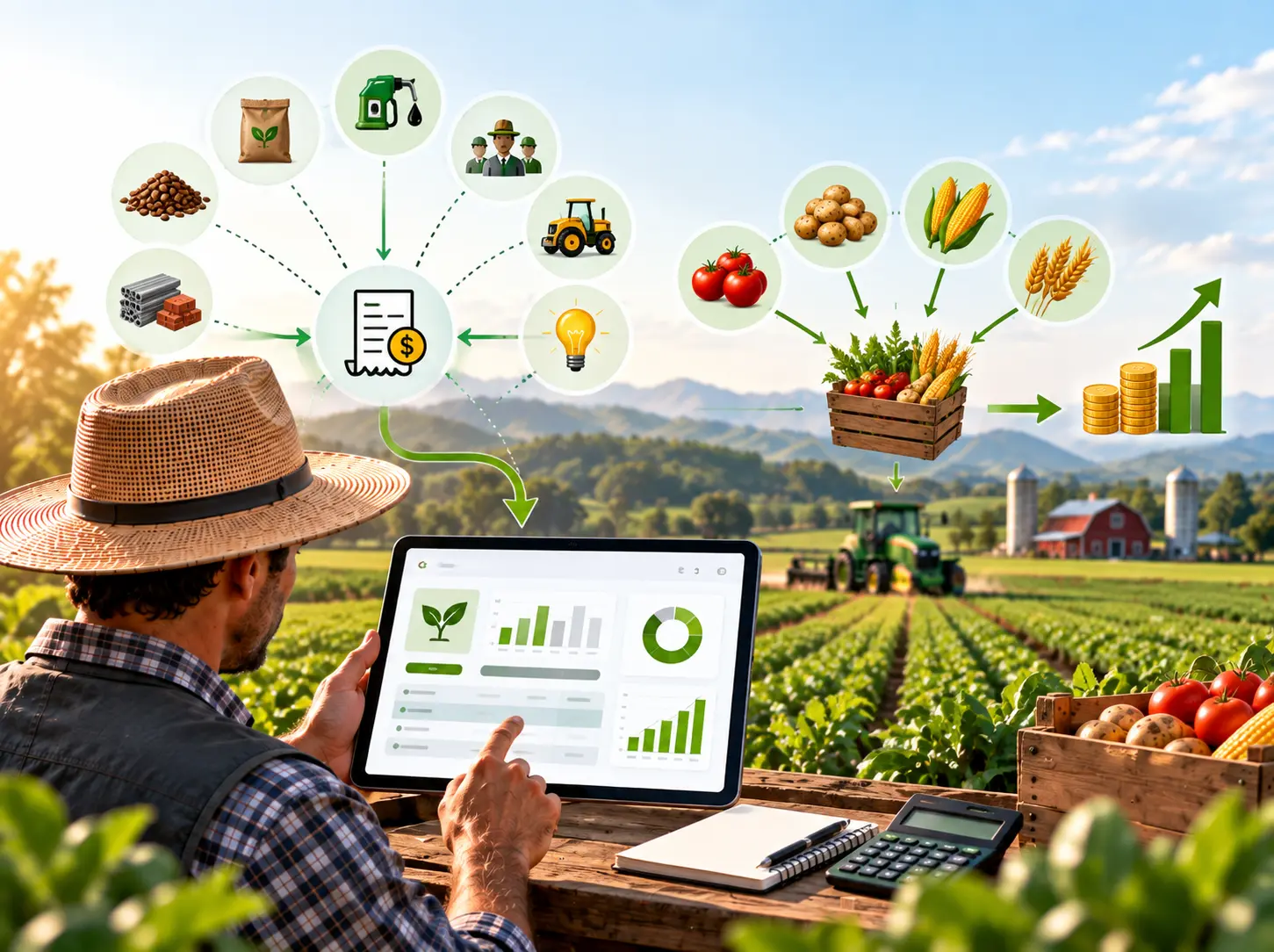
Each season carries its own budget, built with quantities, units, prices and totals, and cost price is planned per crop within the season. Actual season expenses — electricity, labour, assets, miscellaneous costs and raw materials — are recorded against the season as they occur, alongside vendor bills linked to the season. Income and cost are pulled directly from the crop season record, giving an automatic season-level profit-and-loss total without a separate reconciliation step.
Season Budget
Each season carries its own budget, built with quantities, units, prices and totals, and cost price is planned per crop within the season.
Season Expenses
Actual season expenses — electricity, labour, assets, miscellaneous costs and raw materials — are recorded against the season as they occur, alongside vendor bills linked to the season.
Profit & Loss
Income and cost are pulled directly from the crop season record, giving an automatic season-level profit-and-loss total without a separate reconciliation step.
Connect Crop Management With Farm Management
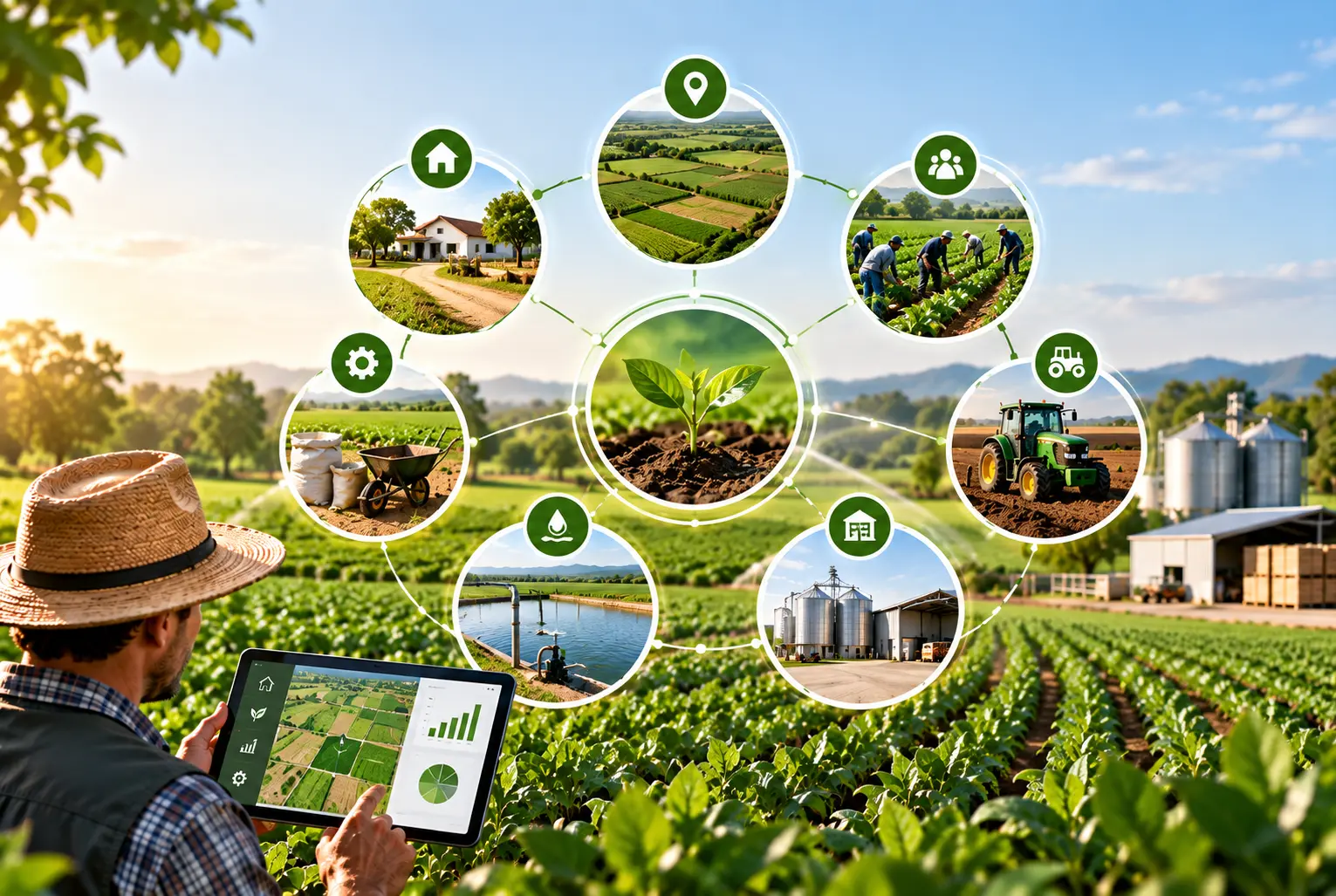
Crop-level planning, monitoring and production sit inside a wider farm operation — farms, fields, labour, assets and equipment that crop activity depends on. See how farm-level resources and operations connect on the Farm Management page.
Farm ManagementConnect Crop Production With the Agricultural Supply Chain
Once a crop season records production and harvest, that output feeds into the next stage — procurement, quality grading, warehousing and eventual sale. See how harvested produce connects into the wider value chain on the Agricultural Supply Chain page.
Agricultural Supply Chain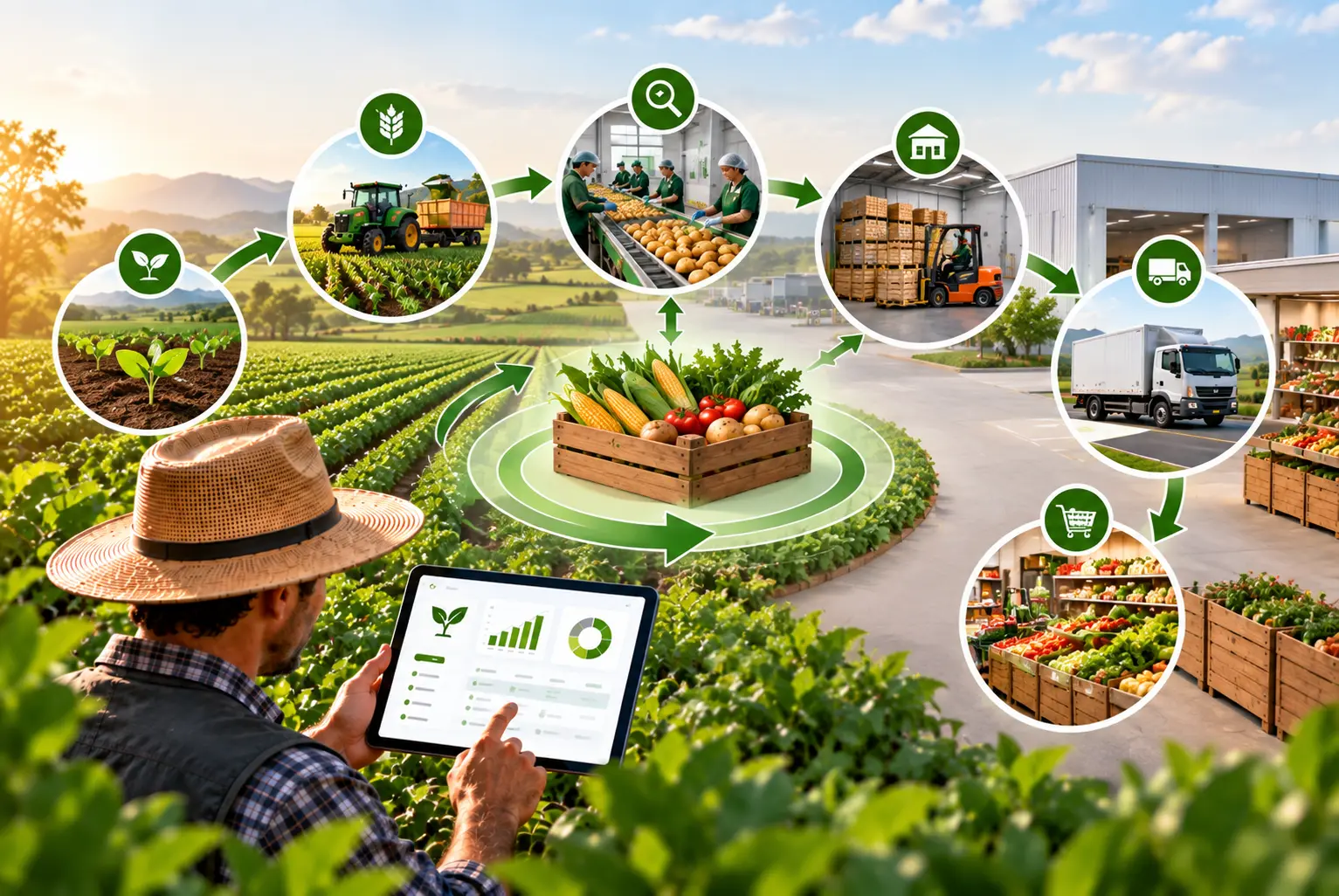
Plan crop seasons, track field activity and crop health, and record production and cost from planning through harvest.